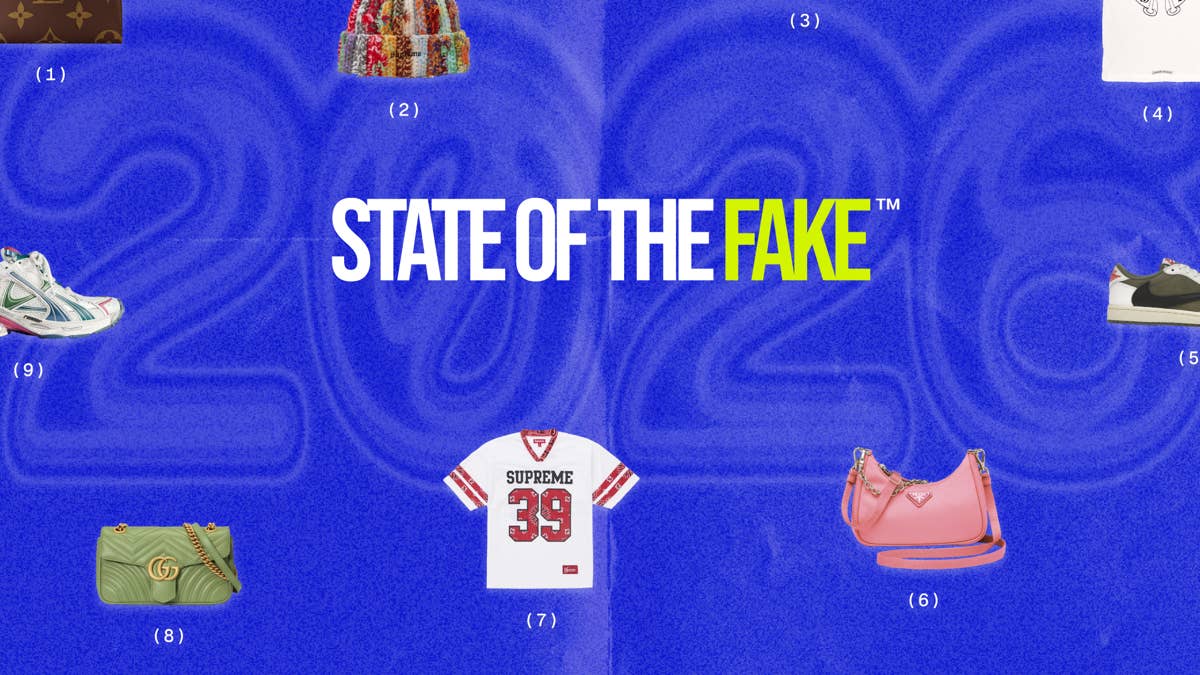
As the secondhand market grows, the fashion industry spends a lot of time discussing which luxury brands and items are the most lucrative on resale sites, but which brands are the most counterfeited? On Thursday, AI-powered authentication platform Entrupy released its State of the Fake 2026 report, which highlights how common counterfeiting is among various brands and items.
An official authenticator for TikTok Shop, Entrupy also works with retailers, secondhand shops and department stores around the world to authenticate handbags, sneakers and apparel using AI that compares more than 90 million images of real and counterfeit products. It authenticated $3.34 billion worth of merchandise last year and boasts a 99.86% accuracy rate.
Luxury's Most-Faked Brands
Of Entrupy's total luxury authentications for 2025, the vast majority — 91.9% — came back authentic.
Louis Vuitton was named the "most-faked" luxury brand, meaning it had the largest volume of "unidentified" items (or pieces Entrupy cannot verify as authentic) submitted for review. That said, Louis Vuitton also saw the largest volume of items in general — the brand accounted for 33.14% of all luxury submissions — so the number of unidentified items was naturally high as well.
Gucci was second on the list, with $17,841,197 worth of fake Gucci bags submitted through Entrupy in 2025, followed by Prada, then Chanel. Dior ranks as number five, despite making up only 4.68% of Entrupy's total submissions.
Luxury's Most At-Risk Brands
That list doesn't necessarily reflect how likely a brand is to be counterfeited, though. While Entrupy determines its most-faked brands by volume, its "riskiest brands" are those with the highest rate of fakes, reflecting the percentage of unidentified items relative to the brand's total submissions. Goyard, for example, made up only 1% of submissions, but had the highest fake rate of 18.9%, making it the platform's riskiest brand.
According to Entrupy, a counterfeiter's sweet spot is a brand that offers limited distribution, engineers "deliberate mystique" and designs an instantly recognizable pattern. Goyard fits neatly into that description, as its interlocking dot pattern has long set the beloved French label's accessories apart.
Prada was named the second-riskiest brand at 13.1%, followed by Saint Laurent at 10.5%, Dior at 9% and Givenchy at 8.9%. In Entrupy's 2025 report, Loewe took the top spot as fashion's riskiest brand, but the Spanish luxury house was absent this year, likely thanks to "growing market awareness, increased authentication volume and counterfeiters shifting focus to softer targets," according to the report.
Apparel and Footwear: More Likely to Be Fake
While they don't lead by volume, luxury sneakers boast some of the highest fake rates in the market. Aspirational demand fuels this problem, the report says, as some consumers are merely chasing logos rather than actual craftsmanship. Louis Vuitton leads the pack with a 54.1% fake rate, while Dior follows close behind at 42.5%. Balenciaga (36.2%), Christian Louboutin (27.9%) and Alexander McQueen (19.2%) fill out the top-five podium.
Apparel, however, is Entrupy's true riskiest category — nearly one in three clothing items were classified as unidentified. Fear of God Essentials tops the list of riskiest apparel brands with a whopping 95.75% fake rate, meaning nearly every item submitted for authentication to Entrupy is unidentified. As the report points out, the apparel resale market is booming, meaning counterfeiters are growing increasingly savvy when it comes to replicating authentic styles (especially in streetwear).
Rounding out the risky apparel brands, Bape sits at 85.19%, Nike at 73.33%, Sp5der at 61.02% and Denim Tears at 35.97%. As Entrupy points out in its report, "accessible, high-demand basics with simple branding and steady resale appeal are the easiest targets" when it comes to counterfeiters.
On the other hand, Supreme and Off-White have the lowest rate of apparel fakes relative to volume, coming in at 13.2% and 2.9%, respectively. Entrupy authenticates apparel from these two brands more than any other, but their trusted resale ecosystems have resulted in lower counterfeit rates.
Check out the full report here.
* This article was originally published here